How many times a day do you think about the way your data is stored and structured?
It doesn’t need to be your Roman Empire. But it should cross your mind from time to time, because it might be causing you problems.
BI Book’s data warehousing and transformation layer takes everything your systems produce, cleans it, structures it and makes it ready for reporting, planning and AI. One version of the truth, built for how your business actually works.
Contact Us
When the data underneath is wrong, everything built on top of it is wrong too.
A dashboard is only as good as what feeds it. A forecast is only as reliable as the data it’s built from. Most reporting problems that look like tool problems are actually data structure problems: inconsistent formats, unmapped dimensions, duplicates that nobody’s cleaned up, fields that mean different things in different systems.
Data warehousing is the difference between numbers your leadership team trusts and numbers they double-check before presenting them – not just a nice technical thing to have.
Clean and structured data that's ready when you need it.
Data cleaning and validation
When data arrives from multiple systems, it arrives with all the inconsistencies those systems have accumulated. Different date formats, duplicate records, missing values, fields that don’t quite match up. BI Book resolves all of this automatically as data moves into the warehouse.
The resulting data is consistent, comparable and trustworthy. The manual cleaning, spreadsheet corrections and complicated version history will be a thing of the past.
Transformation and modelling
Raw data reflects your systems. Transformed data reflects your business. BI Book applies the business logic – cost centre mappings, entity hierarchies, product categorisations, currency conversions – so that what comes out the other end makes sense to a CFO, not just a data engineer.
Custom transformation rules mean the warehouse is built around your reporting needs, your planning structure and your organisational model. When those change, the warehouse adapts.
Centralised storage and governance
Everything lands in a single, governed data warehouse that the whole BI Book platform draws from. Finance, HR, operations and management are all looking at the same data, structured the same way, at the same time.
Access is controlled, change history is tracked, and the data layer is built for audit readiness from the ground up. When you need to show your workings, they’re already there.
From source system to business insight in four steps.
Every piece of data your business generates goes through the same journey before it reaches a report or a dashboard. Here’s what that looks like inside BI Book.
- Collect: Data arrives from your source systems into one secure environment. ERP, CRM, HR, finance, e-commerce – everything flows in automatically through the BI Book Integrator, on the schedule you define.
- Clean: Inconsistencies, duplicates and formatting mismatches are resolved automatically. Data from different systems becomes comparable, where the same field means the same thing, regardless of where it came from.
- Structure: Business logic is applied. Relationships between data sets are defined, dimensions are mapped and the data is modelled to reflect how your organisation actually works, not just how your systems store it.
- Deliver: Clean, structured data is ready for dashboards, reports, forecasting and AI. The moment it’s needed, every time, with no manual steps between the source and the insight.
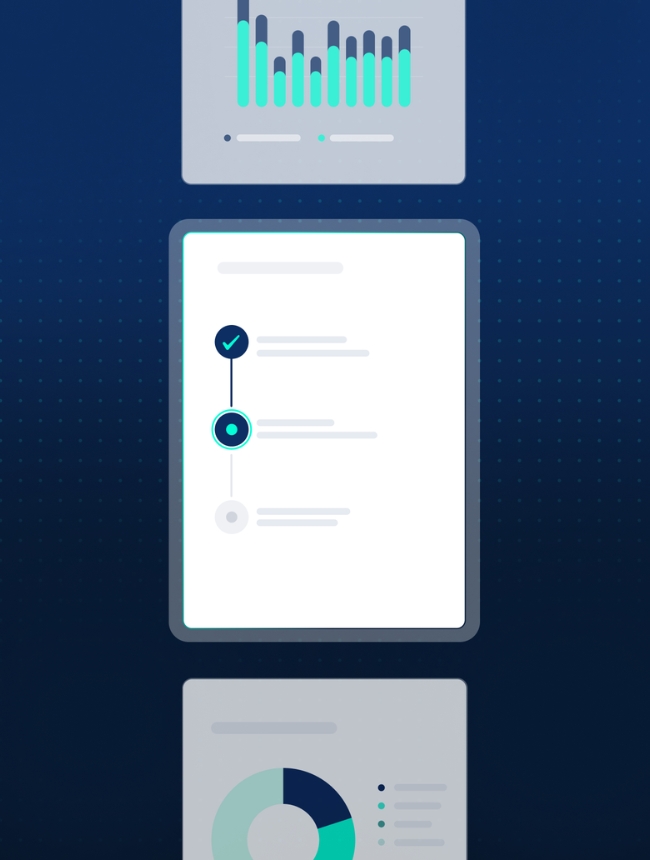

The same infrastructure. Four very different business problems it solves.
Financial consolidation: Unify reporting across multiple legal entities, cost centres and currencies without manual reconciliation. The warehouse handles the mapping so your consolidated financials are always consistent and audit-ready.
Dimensional bookkeeping: Apply cost centre, project and department dimensions directly in the data layer, with your organisation’s own logic built in. Reports and dashboards inherit the structure automatically,’ no manual tagging required.
Procurement & inventory matching: Transform procurement records, purchase orders and inventory data into a consistent structure for operational reporting. Mismatches between systems are resolved in the warehouse, not in a spreadsheet the night before a board meeting.
Scenario-based forecasting: Structure your data to support multiple planning scenarios side by side. When the foundation is clean and consistently modelled, running best-case, worst-case and base-case forecasts becomes a planning exercise rather than a data exercise.
Your data is already there. Let’s make it work properly.
If your reporting feels unreliable, your dashboards don’t quite add up or your planning is built on data nobody fully trusts, the warehouse is usually where the fix starts. Let’s take a look at your current setup together.